Support our mission
Donate here to support Ukrainian community of Moldova. We are stronger together.


2% Income Tax Redirect
Learn how to support NCUM by redirecting 2% of your income tax.
Learn how to direct your 2%NCUM and UNHCR Hold Practical Training on Employment Integration of Refugees from Ukraine in Cooperation with Moldova’s National Employment Agency





Chisinau, 18 November 2026
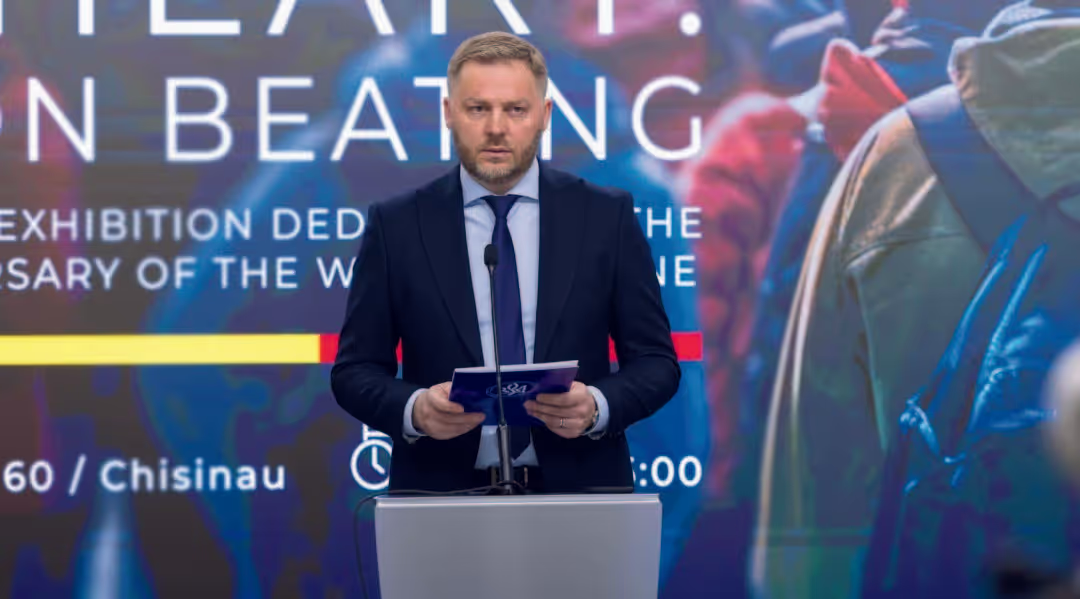
The National Congress of Ukrainians of Moldova (NCUM), in cooperation with the United Nations High Commissioner for Refugees (UNHCR) and the National Employment Agency of the Republic of Moldova (ANOFM), held a practical training session focused on facilitating employment opportunities for refugees from Ukraine and strengthening cooperation with employers.
The event brought together 19 ANOFM representatives, including staff from its territorial subdivisions, to examine practical approaches to candidate support, employer engagement and the application of European experience in the Moldovan labour market.
The programme combined international expertise with practical experience from the ROBOTA project, implemented by NCUM with UNHCR support. The sessions were led by Steven Bunce, Integration Officer at UNHCR’s Regional Bureau for Europe, and Hanna Hafarova, Employment Consultant within the ROBOTA project at NCUM.
European experience: addressing the gap between employment and skills
The international component focused on findings from European research on the labour market integration of Ukrainian refugees. The evidence points to a significant gap between access to employment and the effective use of professional qualifications: while many refugees have entered employment, a substantial proportion work below their previous skill level.
The discussion highlighted the importance of moving beyond employment placement as the sole measure of integration. Effective labour market inclusion also requires skills assessment, recognition of professional qualifications, access to relevant language training and opportunities to apply previous professional experience.
Participants also examined employer engagement practices from other European countries, including the Jobs for Ukraine initiative in Romania and Nova Post's experience in Poland. These examples demonstrated the importance of targeted employer engagement, candidate pre-screening, practical support throughout recruitment and long-term cooperation with companies.
ROBOTA: practical experience in the Moldovan context
The second part of the training focused on the implementation experience of ROBOTA, which has evolved from individual employment consultations into a comprehensive approach combining candidate support, employer engagement, digital tools and institutional cooperation.
The practical session examined the different stages of employment support, from initial consultations and assessment of candidates' professional experience to vacancy matching, communication with employers, interview preparation and follow-up after recruitment.
Particular attention was given to barriers that can affect employment outcomes, including language proficiency, transportation, working schedules, childcare responsibilities, professional qualification requirements and uncertainty regarding formal employment procedures.
The experience of ROBOTA demonstrates that matching a vacancy with a candidate's professional profile does not automatically result in successful employment. Effective matching requires an understanding of both the candidate's circumstances and the employer's actual workforce needs.
Anna Hafarova, NCUM Employment Consultant, shared practical insights from the ROBOTA project and its work with users of the DILO.MD platform, explaining how to support individuals throughout the employment pathway — from the initial consultation and job matching to starting work and adapting to a new workplace.
DILO.MD was developed within the ROBOTA project, implemented by NCUM in partnership with UNHCR, with support from UNHCR Moldova and the EBRD.
Strengthening institutional cooperation
An important part of the discussion concerned the role of cooperation between public employment services, civil society organisations, international partners and private-sector employers in facilitating refugees' access to the labour market.
Raia Dogaru, Director General of ANOFM, emphasised the importance of institutional involvement in this process:
“We consider the integration of refugees into the labour market both necessary and responsive to current realities. This is why we want to be actively involved in this process.”
Dmitri Lecartev, Head of NCUM, highlighted the broader role of employment in the integration and self-reliance of Ukrainian families:
“Since 2022, the National Congress of Ukrainians of Moldova has been supporting Ukrainian families who were forced to leave their homes because of the war. We understand that employment is not only a source of income, but also an opportunity to regain professional fulfilment, achieve independence and build confidence in the future.”
The discussion identified several areas relevant to further cooperation in Moldova:
- More systematic assessment of candidates' skills, qualifications and employment preferences;
- Closer engagement with employers based on their actual recruitment needs;
- Improved coordination between employment services and organisations providing specialised support to refugees;
- Practical guidance for employers on documentation, recruitment procedures and workplace adaptation;
- Follow-up support after employment to strengthen job retention and sustainable integration.
A nationwide series of practical training sessions
The Chisinau meeting marked the beginning of a series of practical training sessions planned in different regions of Moldova. The initiative aims to extend the exchange of experience and strengthen the capacity of ANOFM territorial subdivisions to support refugees seeking employment.
The next sessions are scheduled to take place in:
- Cimislia – 19 November 2026
- Balti – 27 November 2026
From employment placement to sustainable economic integration
The exchange reaffirmed that employment integration is not limited to connecting jobseekers with available vacancies. It requires coordinated support throughout the recruitment process, attention to professional potential and the removal of practical barriers affecting both candidates and employers.
For NCUM, cooperation with ANOFM and UNHCR represents an important component of its work to strengthen employment pathways for Ukrainians in Moldova and promote the more effective use of their professional skills and experience.
The training sessions are held within the framework of the ROBOTA project, implemented by the National Congress of Ukrainians of Moldova with the support of UNHCR.